Home › News › Why Is My Car Insurance $400 a Month With a Clean Record?
Why Is My Car Insurance $400 a Month With a Clean Record?
Short answer: A clean driving record helps, but it is only one rating factor. Where you garage the car, the vehicles and drivers on the policy, collision and comprehensive coverage, mileage, and (where allowed) a credit-based insurance score can all keep a monthly bill high.
Why is my car insurance $400 a month with a clean record?
A clean driving record is one rating factor, not the whole premium. Answer four yes-or-no questions. The result is a checklist of official pricing factors — not a quote and not a savings estimate. Nothing you enter is collected or sent anywhere.
Have you compared quotes from more than one company in the last 12 months?
Do you carry collision and comprehensive on this car (often called “full coverage”)?
Is more than one car, or another licensed driver, listed on the policy?
Have you asked about discounts and, where allowed, reviewed your credit-based insurance score?
Results will appear here after you answer the questions and tap the button.
Why a clean driving record is not the whole price
The Insurance Information Institute lists the items that commonly set an auto premium. A driving record is first on that list: a better record generally means a lower price, and at-fault accidents or serious tickets generally mean a higher one. The same page then lists several other factors that have nothing to do with whether you have had a crash.
Those additional factors include how much you use the car, where you live and park it, your age, the vehicle itself, a credit-based insurance score, and the type and amount of coverage you buy, including deductibles and optional collision and comprehensive. Not every company uses every factor, and some factors are prohibited in some states.
That is why two people with equally clean records can see very different bills. The record is one input. The rest of the household, the cars, the coverages, and the location still have to be priced.
Key takeaways
- A clean record is one factor, not a guaranteed low price
- Collision and comprehensive are optional coverages priced separately from liability
- Extra cars and extra drivers, especially younger drivers, change the premium
- Location and mileage matter, and ZIP-level rating is prohibited in California and Michigan
- Ask about discounts and, where allowed, review a credit-based insurance score
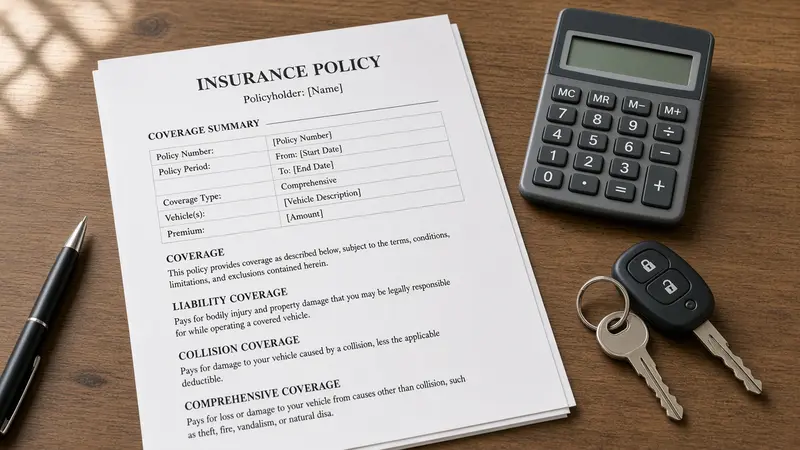
Source: What determines the price of an auto insurance policy?, Insurance Information Institute, November 8, 2026. Basic facts are summarized from that report; this explainer is our own writing.
What “paying $400 a month” actually asks
Drivers type “$400 a month” because that is how a renewal or draft often looks, not because $400 is an official average. This page treats that figure as the question people ask, not as a national typical premium. We do not publish an invented average monthly price here.
The Texas Department of Insurance also reminds shoppers to look at the declarations page for coverages, dollar limits, and deductibles, and to compare the same package at every company. A monthly draft can hide a down payment, a six-month term, or fees. Ask for the full term premium before you decide that two offers are alike.
If a low teaser quote later jumped after the company had your real details, see why a $29/month quote ends up $100+. If the bill rose even though you had no crash, see why car insurance went up with no accidents.
Coverage you chose: liability vs collision and comprehensive
The III’s coverage basics explain that the liability coverage most states require pays for injuries and property damage you cause to other people. It does not pay to repair or replace your own car. Collision and comprehensive are optional coverages that do that job, and they are priced separately.
Collision reimburses damage to your car from a crash with another vehicle or object, including potholes and rollovers, but not mechanical failure or normal wear-and-tear. Comprehensive covers theft and non-collision damage such as fire, flood, vandalism, hail, falling objects, or striking an animal.
The Texas guide uses the same split and notes that a lender will require both coverages if you still owe money on the car.
“Full coverage” is not a legal term. People usually mean liability plus collision and comprehensive. To see how the collision and comprehensive premiums you actually pay compare with your car’s value, use the full coverage vs liability-only break-even calculator.
Household, cars, miles, and location
III notes that urban drivers typically pay more than drivers in small towns or rural areas because of higher rates of vandalism, theft, and accidents, and that insurers often factor rates down to the ZIP code — except in California and Michigan, where ZIP-level rating is prohibited. Where you park (street or garage) and anti-theft features can also matter.
Mileage, use, and the vehicle itself also feed the price: a long commute generally costs more than occasional “pleasure use,” and value, theft risk, repair cost, and safety record all matter.
Age is another listed factor: insurers generally charge more when teenagers or adults under 25 drive the car, though Hawaii and Massachusetts prohibit age as a rating factor. Texas notes that some companies require every licensed household member to be listed.
Credit-based insurance scores, where they are allowed
III describes a credit-based insurance score as a statistical tool that predicts the chance of a claim and its likely cost. It is similar to, but not the same as, a regular credit score. Texas says a company may not turn you down or charge more *only* because of your credit score. Some states limit or prohibit the factor. See does my credit score affect my car insurance?.
Discounts to ask about (without a promised percentage)
Texas’s consumer guide lists discounts that can lower a premium. Each company decides what to offer and how much. You might get a discount for airbags, antilock brakes, and antitheft devices; a completed defensive-driving or driver-education course; more than one car on a policy; other policies with the same company; or no claims and a good driving record.
III’s pricing page also notes that vehicles with advanced driver assistance systems might qualify for premium discounts. None of those sources attach a nationwide savings percentage to a clean record, and this page does not invent one.
Decision helper: what to review first
| Your situation | What to do first |
|---|---|
| You have not compared quotes in the last year | Get several quotes with the same limits and deductibles |
| You carry collision and comprehensive on an older, low-value car | Enter your premiums and the car’s actual cash value in the break-even calculator |
| A lender or lease requires physical-damage coverages | Keep collision and comprehensive; compare deductibles rather than dropping the coverages |
| Another licensed person lives with you | Ask whether they must be listed, excluded, or rated as a driver under your state’s rules |
| You have not asked about discounts | Ask each company about safety features, defensive driving, multi-car, multi-policy, and good-driver discounts |
| Credit may be used in your state | Review the credit-based insurance score or consumer report the company used and dispute errors |
Step-by-step: review a high clean-record bill
- Pull your declarations page and write down each coverage, limit, and deductible.
- List every car and every licensed driver in the household, including people who rarely drive.
- Note annual mileage and whether each car is used for commuting, pleasure, or business.
- Separate the liability premium from the collision and comprehensive premiums if your bill or declarations page shows them that way.
- Ask whether a lender or lease requires collision and comprehensive.
- Ask each company which discounts already apply and which ones you might still document.
- If your state allows credit-based insurance scores, request or review that report and look for errors.
- Compare at least a few quotes using the same limits and deductibles.
- Ask for the full term premium, fees, and payment schedule, not only the monthly draft.
- Keep your current policy in force until a new one is issued.
Questions to ask when you compare quotes
:::template Questions for a clean-record premium review
- What limits and deductibles are in this quote? - How much of the price is liability, and how much is collision or comprehensive? - Which drivers and cars are rated on this policy? - Which discounts are already included, and what proof do you need for any others? - Do you use a credit-based insurance score, and is that allowed in my state? - What is the full term premium, including fees, before any monthly split? :::
Edge cases and common mistakes
Do not treat a monthly number as the whole contract. Do not cancel a policy before the replacement is in force. Do not hide a household driver — Texas warns that a company that later learns about an unlisted licensed resident can bill extra premium, deny a claim, or choose not to renew. Do not assume dropping collision is allowed if a lender is still on the title.
Color does not set the price. III’s pricing article is about record, use, location, age, the vehicle, credit, and coverage — not paint.
Is your auto coverage ready for a comparison?
If you want help lining up comparable quotes, a licensed agent can use the same limits and deductibles at more than one company. That does not change how your record is rated, but it does keep the offers on the same coverage.
FAQ
Why is my car insurance $400 a month if I have a clean record?
Because a clean record is only one rating factor. III also lists mileage and use, location, age, the vehicle, a credit-based insurance score where allowed, and the coverages and deductibles you chose.
Is $400 a month a typical U.S. car insurance price?
This page does not treat $400 as an official average. It is the way many drivers describe a high monthly bill when they search for an explanation.
Does adding collision and comprehensive raise the price even with a clean record?
Yes. Those optional coverages are priced separately from liability and pay for damage to your own car. A lender or lease may require them.
Can extra drivers on my policy keep the bill high?
Yes. III notes that insurers generally charge more when teenagers or adults under 25 drive the car. Texas notes that some companies require every licensed household member to be listed.
Does where I live matter if I have no tickets?
Yes. Urban areas typically price higher because of more theft, vandalism, and accidents. ZIP-level rating is prohibited in California and Michigan.
Should I drop collision on an older car?
Only after you understand what you would pay yourself after a crash or theft, and only if no lender requires the coverage. The break-even calculator uses your premiums and the car’s actual cash value; it is not advice to drop coverage.
Will shopping around lower a clean-record premium?
Companies do not all weigh the same factors the same way. Comparing quotes with matching limits is how you see whether your current bill is the only price available for your record. This page does not promise a savings percentage.
Can a credit-based insurance score raise my rate if I drive safely?
Where it is allowed, yes — III treats it as separate from your driving record. Some states limit or prohibit it. See does my credit score affect my car insurance?.
For another perspective, see Trying it on with the car insurance company after they tried it on with me (Simple Living in Suffolk).
Prefer video? Watch the 36-second video on its own page.
Sources
- Insurance Information Institute: What determines the price of an auto insurance policy?
- Insurance Information Institute: Auto insurance basics—understanding your coverage
- Texas Department of Insurance: Auto insurance guide
Reviewed and updated .
Important: This article is general information, not legal, tax, or insurance advice, and coverage rules vary by state, insurer, and policy. AutoInsuranceBundle.pro is a free, independent insurance comparison and referral service. We are not an insurance company, we do not issue policies, and we do not provide insurance advice. Calls to the number on this site are routed to licensed insurance agents or agencies in our partner network, who may receive compensation. Calling is completely voluntary and there is no obligation to buy. Rates, discounts, and availability vary by carrier, state, and individual eligibility; not all carriers, products, or discounts are available in all states. Calls may be recorded for quality and compliance purposes.
AutoInsuranceBundle.pro is a free comparison and referral service, not an insurance company. By tapping Call Now, you will be connected to a licensed insurance agent or agency in our partner network. The call and quote comparison are free; there is no obligation to buy. Any policy you purchase is optional and priced by the insurer. Calls may be recorded for quality and compliance. If you do not want follow-up contact, tell the agent during the call or email contact@autoinsurancebundle.pro.
Who runs this site: AutoInsuranceBundle.pro is an independent informational website. We are not an insurance company or insurer, and we do not sell insurance policies. The number on this page connects you with licensed insurance agents of our partners. Calling is free and optional, with no obligation to buy. Website questions: contact@autoinsurancebundle.pro.
Related reading
- Why Did My Car Insurance Go Up With No Accidents?
- Can a Driving App Raise My Car Insurance?
- Does My Credit Score Affect My Car Insurance?
- Why did my car insurance go up with no accidents?
- Does my credit score affect my car insurance?
- Do I still need full coverage if my car is paid off?
- Full coverage vs liability-only break-even calculator
- How to compare car insurance quotes by phone
- What a licensed agent can help with
- Can I compare quotes by phone?
- What information should I have ready?
- Is comparing quotes free?
- All news and explainers