Home › News › How to Negotiate a Total Loss Payout When the Insurer Lowballs You (2026 Guide)
How to Negotiate a Total Loss Payout When the Insurer Lowballs You (2026 Guide)
Short answer: You do not have to accept the first total loss offer. Ask for the insurer's valuation report, check the trim, mileage, options and condition for errors, find at least three comparable cars for sale near you, gather service records, and send a written counteroffer with that evidence. If you are still far apart, many policies have an appraisal clause. State rules vary.
A total loss call usually comes with a number, and that number often lands lower than the owner expected. Some people hear it about a car they still drive every day in their heads: a reliable older SUV, a commuter sedan they just put new tires on, or a car they still owe thousands on. The good news is that the first offer is usually where the conversation starts, not where it has to end.
The video below walks through the whole process in about three and a half minutes. It uses illustrative images, not photos of any real claim. The full guide follows.
Video transcript
Your car was totaled, and the insurance offer feels too low. Before you sign anything, know this: the first offer is a starting point, not a final answer. Here is how to push back, step by step. First, what a total loss means. An insurer usually totals a car when repairs would cost more than the car is worth, or more than a percentage of its value set by your state. That is why an older car can be totaled over damage that looks minor. A bumper, a few sensors, and labor can easily cost more than a high-mileage car is worth on paper. What the insurer owes you is actual cash value. That is what your car was worth the moment before the crash, based on its year, mileage, options, condition, and recent sales of similar cars near you. Not what you paid, and not what you owe on the loan. Step one. Ask for the valuation report in writing. Most insurers use a third-party valuation report. Read every line. Check the trim level, the mileage, the options, and the condition rating. A wrong trim or a missing package can move the number by hundreds or thousands of dollars. Step two. Build your own comparables. Find at least three cars for sale near you with the same year, make, model, and trim, and similar mileage. Save the listings with prices, dates, and links. Dealer listings and recent sales carry the most weight. If the insurer's comparables are from far away, or are a lower trim, point that out. Step three. Prove your car's condition. Gather service records, receipts for new tires, brakes, or a recent major repair, and photos taken before the crash. An adjuster cannot see that you replaced the transmission last spring unless you show it. Step four. Check what else belongs in the payout. Depending on your state and your policy, a total loss settlement may also include sales tax, title, and registration fees. Ask the adjuster directly whether those are included, and get the answer in writing. Step five. Make a written counteroffer. Keep it short and factual. State the amount you believe is fair, attach your comparables and records, and list each error you found in their report. Be polite, and be specific. Numbers win this argument, not anger. Step six. If you are still far apart, look at the appraisal clause. Many auto policies have one. Each side hires its own independent appraiser, and if they disagree, an umpire decides. It costs money, so it makes the most sense when the gap is large. Read your own policy to see if you have this option. You can also file a complaint with your state department of insurance if you believe the claim is being handled unfairly. Your state may also have rules on how total loss values must be calculated. If the other driver caused the crash, you can usually file with their liability insurer instead of your own. And if you still owe more on the loan than the car is worth, gap insurance may cover the difference. Without gap coverage, the remaining balance is still yours. Two mistakes to avoid. Do not accept a payment before you have reviewed the valuation, because cashing it may close the claim. And do not let the car sit in a storage yard for weeks without asking who is paying the storage fees. State rules vary, so check your policy and your state's insurance department. If you are shopping for new coverage after a total loss, you can compare free quotes by phone at 888 217 5854, or read the full guide at autoinsurancebundle.pro.
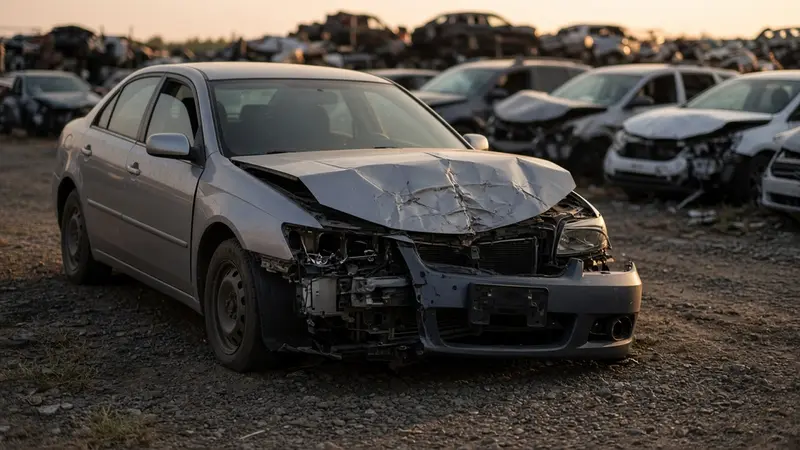
Why your car was totaled (even over "minor" damage)
Insurers generally declare a total loss when the cost to repair the car is more than its value, or when repairs pass a percentage of the value set by state rules or company guidelines. Progressive's claims FAQ, for example, notes that in some states a car may be totaled when repairs would exceed a percentage such as 80% of its value.
That is why an older or high-mileage car can be totaled after damage that looks small. Modern bumpers hide radar sensors, brackets and cameras, and body shop labor is not cheap. On a car worth a few thousand dollars on paper, a rear bumper, a tailgate and recalibration can cross the line quickly. You can sometimes ask for a second repair estimate, but if the numbers really are close to the value, the conversation usually shifts to the payout itself.
Source: Common Auto Claims Questions (total loss, actual cash value, salvage value), Idaho Department of Insurance, November 4, 2026. Basic facts are summarized from that report; this explainer is our own writing.
What the insurer owes you: actual cash value
Most auto policies pay actual cash value (ACV): what your car was worth the moment before the loss. The Idaho Department of Insurance describes ACV as replacement value minus depreciation, and it is shaped by the year, mileage, options, condition and recent prices of similar cars in your area.
ACV is not what you paid, not what you owe on the loan, and not the price of a brand-new replacement. If you carry collision or comprehensive on your own policy, your deductible is usually subtracted. If you keep the wreck, the insurer typically subtracts its salvage value too.
How to negotiate a total loss payout: step by step
- Get the valuation report in writing. Many insurers use a third-party valuation report. Ask for the full copy, not a summary over the phone.
- Check every line for errors. Look at the trim level, engine, drivetrain, mileage, options and the condition rating. A base trim listed instead of a higher one, or a missing package such as all-wheel drive or a tow package, can move the value significantly.
- Build your own comparables. Find at least three cars for sale near you with the same year, make, model and trim and similar mileage. Save the listing, price, date, mileage and link for each. Dealer listings and recent sales from your region carry the most weight.
- Challenge weak comparables. If the insurer's comps are far away, a lower trim, much higher mileage or old listings, point out each one specifically.
- Prove the condition. Send service records, receipts for tires, brakes, a new battery or a major repair, and any photos taken before the loss. The Insurance Information Institute also mentions mileage records, service history and mechanic statements as evidence that a car was worth more than a typical one.
- Ask what else belongs in the settlement. Depending on your state and policy, a total loss payment may include sales tax, title and registration fees. Idaho's insurance department, for example, says insurers there typically pay sales tax and title transfer fees. Ask your adjuster, and get the answer in writing.
- Send a written counteroffer. Keep it short: the amount you believe is fair, your comps and records attached, and a list of each error you found. Polite and specific beats angry and vague.
- Use the appraisal clause if you are still far apart. Many auto policies include one. Each side hires an independent appraiser, and if they cannot agree, an umpire decides. You usually pay your own appraiser, so it makes the most sense when the gap is large. Check your policy wording first.
- File a complaint if handling seems unfair. Your state department of insurance takes consumer complaints, and many states have rules on how insurers must calculate total loss values.
If the other driver caused the crash
You can usually file the property damage claim with the at-fault driver's liability insurer instead of your own collision coverage. That can mean no deductible, but it may take longer while fault is sorted out. The same negotiation steps apply: the other insurer still owes the car's actual value, and you can still dispute it with evidence. Fault rules vary by state; see our guide to at-fault vs. no-fault states.
If you still owe money on the car
If the car is financed, the insurer usually pays the lender first, and you get anything left over. If you owe more than the car's ACV, the remaining balance is still yours unless you carry gap coverage. Our guide to gap insurance when a car is totaled explains how that works and what gap usually does not cover.
A small check after the loan payoff is a common surprise. That is one more reason to fight for an accurate ACV: every dollar added to the valuation either reduces your loan shortfall or ends up in your pocket.
Common mistakes to avoid
- Accepting payment before reviewing the valuation. Cashing a settlement may close the claim. Read the report first.
- Negotiating only by phone. Keep the key points in email so there is a record.
- Leaving the car in storage for weeks. Storage fees add up. Ask who is paying and move the car if needed; see towing and storage fees after an accident.
- Forgetting personal items and add-ons. Remove belongings, and ask whether aftermarket equipment is covered under your policy.
- Giving up after one "no." Ask what specific evidence would change their number, then provide it.
If a claim is denied outright rather than undervalued, see what to do when a car insurance claim is denied. If an airbag deployment triggered the total loss, our airbag total loss guide explains how insurers decide. Value lost on a car that was repaired, not totaled, is a separate issue covered in our diminished value guide.
Is your auto coverage ready for the next car?
After a total loss, many drivers buy a replacement car within days, and the new car needs coverage from the moment you drive it away. It is a good time to check your collision deductible, whether gap coverage makes sense on the new loan, and whether your liability limits still fit. Compare free quotes by phone at (888) 217-5854. State rules and policy terms vary.
FAQ
Can I refuse the insurance company's total loss offer?
Yes. You can decline the first offer and send a written counteroffer with comparable listings, service records and any errors you found in the valuation report. If you still disagree, check your policy for an appraisal clause or contact your state department of insurance.
Why did they total my old car over minor damage?
Because repair cost is compared with the car's value. On an older or high-mileage car, a bumper, sensors and labor can exceed the value or the state total loss threshold, even when the damage looks small.
What if I owe more on the loan than the payout?
The insurer pays the lender first. If the payout is less than the loan balance, you still owe the difference unless you carry gap insurance. See our gap insurance guide.
Do total loss settlements include sales tax?
It depends on your state and your policy. Some states require insurers to include sales tax and title fees in a total loss payment. Ask the adjuster and get the answer in writing.
Can I keep my totaled car?
Often, yes, depending on state rules. The insurer typically subtracts the salvage value from your payout, and the car may need a salvage title before it can be registered again.
Important: This article is general information, not legal, tax, or insurance advice, and coverage rules vary by state, insurer, and policy. AutoInsuranceBundle.pro is a free, independent insurance comparison and referral service. We are not an insurance company, we do not issue policies, and we do not provide insurance advice. Calls to the number on this site are routed to licensed insurance agents or agencies in our partner network, who may receive compensation. Calling is completely voluntary and there is no obligation to buy. Rates, discounts, and availability vary by carrier, state, and individual eligibility; not all carriers, products, or discounts are available in all states. Calls may be recorded for quality and compliance purposes.
Related reading
- Airbags Deployed in a Crash: Is the Car Automatically Totaled?
- Car Caught Fire? What Car Insurance Covers After an Engine, Electrical, or Arson Fire
- Car Totaled With No Gap Insurance? What Happens to Your Loan and How Gap Coverage Works
- How to compare car insurance quotes by phone
- What a licensed agent can help with
- What information should I have ready?
- Do the rules differ by state?
- All news and explainers